
Archive for the ‘general math’ Category
Regular readers will know that I like to find even the smallest excuse for a celebration and I usually look to recreational mathematics for inspiration. Recent random celebrations include Unix time 1234567890, my Venusian Birthday and last year’s pi day (coming up again really soon by the way).
Well, thanks to a reminder from mathmom, I’ve just discovered that today is a square root day. The next one wont be until 4th April 2016 – over 7 years away! Seems like a good enough reason to celebrate to me :)
The 50th Carnival of maths has been posted over at the The Endeavour. Lots of great stuff as usual, head over there to check it out.
I first came across Albrecht Dürer, an artist from the 15th and 16th centuries, while looking into pentaflakes a little while back. In the comments section of the pentaflake post someone pointed me to a wonderful picture of a Rhino drawn by Dürer.

What makes this picture particularly amazing to me is that Dürer had never even seen a Rhino when he produced it. Well, thanks to the Wolfram Demonstrations project, Dürer has made another appearance in my consciousness. It turns out that he laid out a recipe for producing a heptagon using nothing more than a straight-edge and a compass and Ralf Schaper has brought this bang up to date by showing all of the steps in a Wolfram Demonstration.

I wonder what other mathematics Dürer had a hand in?
For some time now I have been aware of the fact that google have been digitizing thousands of books on all manner of subjects because they have been turning up in my search results. Now, when they first started doing this it caused something of an outcry because the book’s authors and publishers were (quite rightly) concerned that making large tracts of their texts available online for free might affect sales somewhat.
The moral and legal discussions concerning all of this are still ongoing and will likely do so for some time (see this, this and this for example) but I don’t want to talk about that – I am MUCH more interested with books (and maths books in particular) that are in the public domain. In other words, maths books that are freely available to all without damaging the pockets of any hard-working authors.
So, let’s see what we can see. First off, go to google books and click on Advanced book search. In the search field select Full View Only and in the subject field type Mathematics. When I did this, the first few results were all in French which is great if you speak French but since I don’t I needed to dig a little deeper into the search results. There are a few more in German and what I think might be Latin but eventually I started to come across a few that really piqued my interest. Of course I could have just restricted the language to English Only but I was having a bad day!
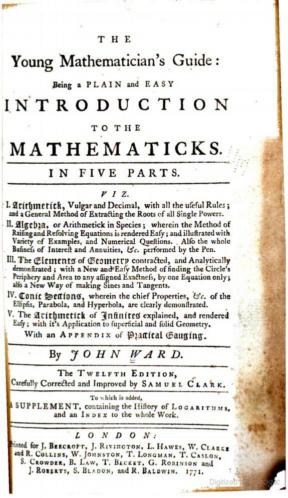
For an idea of how young people learned their mathematics back in the 18th century check out John Ward’s classic text The Young Mathematician’s Guide. There are several editions available on google books but the image below is from the 12th edition (dated 1771) which was scanned from an original in the library of the University of Michigan. Click on the image for the link to the full version in pdf format.
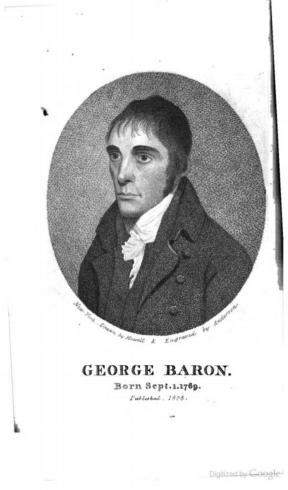
How about Volume 1 of the Mathematical Correspondent by George Baron – apparently the first mathematical periodical published in the United States?
Ever wondered what kind of maths problems you would be expected to solve if you did a degree in mathematics at Cambridge around 1801-1820? Of course you did!

You might be interested in the solutions too! Since these are long out of copyright you can download them in full and read them at your leisure.
This is just a tiny sample of the 500+ books that came up in my full text search so please take a look and report back on any interesting snippets you find. Have fun!
The 49th Carnival of Mathematics has been posted over at 360 and includes posts on game theory, fractals, finite differences and an awful lot of trivia about the number 49 among other things. Head over there to check it out.
If I were to ask most of you what the exact date and time was right now then you would probably give me an answer based on the Gergorian Calendar system. For example as I type this sentence, the Gergorian time and date is “13:50 and 20 seconds on 12th Feburary 2008.”
Of course, the Gregorian calendar isn’t the only calendar system that has been used over the course of history. Some alternatives that spring to mind (some of which are still used) include the Julian Calendar, the Islamic calendar, the Chinese Calendar and the Roman Calendar. Check out www.fourmilab.ch/documents/calendar/ for a few more examples.
The calendar type I want to discuss today is called Unix Time*
Unix time was created back in the 1970s to serve the time keeping needs of the first Unix based computers and it has been used by many operating systems ever since. Unix time is very simple – it consists of nothing more than an integer which represents the number of seconds that have elapsed since 00:00 Universal time on January 1, 1970 in the Gregorian calendar. This may seem like an odd date to start a calendar but they had to start somewhere and it coudn’t be too early since the Unix time had to fit into a 32bit integer.
So why am I telling you this you may wonder? Well, the Unix time will soon be 1234567890 which I find fun since I am a numbers nerd. Since I live in the UK this will correspond to February 13, 2009 at 23:31:30 and I intend to celebrate (well it’s as good a reason as any)!
For some of you, 123456890 will correspond to Valentines day – giving you two reasons to celebrate on that particular day. To find out exactly when this momentous date falls for you try the following Perl command
perl -e ‘print scalar localtime(1234567890),”\n”;’
Or if, like me, you prefer Python
python -c ‘import time; print time.ctime(1234567890)’
Mathematica doesn’t use Unix time – it measures time from midnight 1st Jan 1900 so to find out when it will be Unix time 1234567890 you need to do something like
DateString[AbsoluteTime[{1970,1,1,0,0,0}+1234567890]
Something else that I recently discovered about the number 1234567890 is that both 1234567890 + 1 and 1234567890^2 + 1 are prime (originally from Prime Curios but verified by me using Mathematica).
Finally, if 1234567890 is not interesting enough for you then maybe you are more impressed with the palindromic time of 1234554321 which occurs a few hours earlier – Fri 13 Feb 2009 19:45:21 UTC to be precise.
*As I type this I consider the possibility that there is a formal definition of the term ‘calendar’ and that Unix Time doesn’t fulfill it for some reason. Feel free to correct me in the comments if this is the case.
Here in the UK we have had more snow than we have seen in over 20 years and as a country we are struggling with it to say the least. I have friends in places such as Finland who think that all this is rather funny…it takes nothing more than a bit of snow to bring the UK to its knees.
Anyway…all this talk of snow reminds me of a Wolfram Demonstration I authored around Christmas time called n-flakes. It started off while I was playing with the so called pentaflake which was first described by someone called Albrecht Dürer (according to Wolfram’s Mathworld). To make a pentaflake you first start of with a pentagon like this one.

Your next step is to get five more identical pentagons and place each one around the edges of the first as follows

The final result is the first iteration of the pentaflake design. Take a closer look at it….notice how the outline of the pentaflake is essentially a pentagon with some gaps in it?

Lets see what happens if we take this ‘gappy’ pentagon and arrange 5 identical gappy pentagons around it – just like we did in the first iteration.

The end result is a more interesting looking gappy pentagon. If we keep going in this manner then you eventually end up with something like this
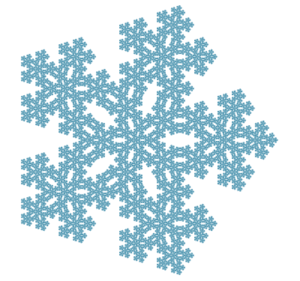
Which is very pretty I think. Anyway, over at Mathworld, Eric Weisstein had written some Mathematica code to produce not only this variation of a pentaflake but also another one which was created by putting pentagons at the corners of the first one rather than the sides. Also, rather than using identical pentagons, this second variation used scaled pentagons for each iteration. The end result is shown below.

Looking at Eric’s code I discovered that it would be a trivial matter to wrap this up in a Manipulate function and produce an interactive version. This took about 30 seconds – the quickest Wolfram demonstration I had ever written. After submitting it (with due credit being given to Eric) I got an email back from the Wolfram Demonstration team saying ‘Why stop at just pentagons? Could you generalise it a bit before we publish it?’
So I did and the result was named N-flakes which is available for download on the Wolfram Demonstrations site. Along with pentaflakes, you can also play with hexaflakes, quadraflakes and triflakes. One or two of these usually go by slightly different names – kudos for anyone who finds them.

Has anyone out there had any experience with distance learning courses in Mathematics? I would like to fill in the gaps in my mathematical knowledge and courses offered by institutions such as the Open University look perfect but I was wondering what alternatives there are out there.
I know that there are many alternatives to doing a paid course – For example, I could just read books or I could drop in on some maths lectures at the university where I work. I already do this sort of thing and I find it difficult to stay focused on any particular topic. I tend to start a month thinking about number theory, move on to a bit of statistics and then end up considering problems in global optimization!
The end result is that I know a little about a lot but I want to try and get more depth to my learning and the thought of a looming exam does wonders for my concentration.
So…What I am after is distance learning courses run by accredited institutions (No diploma mills please) that offer lots of modules which will (eventually) lead to some sort of qualification. Exams are a must! One important criterion is that the course must be part time – I simply don’t have time to work through a one-year masters course. The ability to be able to take individual modules (rather than the whole degree or nothing) would also be desirable.
As for academic level – I guess anything from undergraduate upwards will be fine.
Any suggestions?
Near the beginning of the month I posted a new Integral of the week which asked for the indefinite integral of
W(1/x)
Where W is the Lambert W function. I had a response from Simon Tyler who sent me a PDF file with a full solution and as far as I can tell it is correct but feel free to get in touch if you disagree with us.
In case you don’t want to read the PDF file, the solution is
x*W(1/x) + E1(W(1/z))
Where E1 stands for the Exponential Integral which is defined as

In Mathematica notation this solution is written as
x*ProductLog[1/x] + ExpIntegralE[1, ProductLog[1/x]]
Since Mathematica uses the function name ProductLog to stand for the Lambert W function. Let’s differentiate this to see if it is correct
D[x*ProductLog[1/x] + ExpIntegralE[1, ProductLog[1/x]], x]
gives ProductLog[1/x]
So, why did I select this particular integral as integral of the week you may ask? Well it started off with a thread in the Maxima developers mailing list. The developers of Maxima added the Lambert W function fairly recently and the system was having serious problems finding the integral W(1/x). If you evaluate
integrate(lambert_w(1/x),x)
in Maxima 5.17.1 then the integrator just loops endlessly – never finding a solution. The members of the maxima developers forum knew what the result should be but they couldn’t get maxima to find it. This got me curious so I fired up Mathematica 7 and did
Integrate[ProductLog[1/x],x]
Mathematica replied by simply returning the unevaluated integral to me. So, not only did Maxima fail at this particular integral but so did Mathematica. Could MATLAB 2008b do any better with its new Mupad-based symbolic toolbox?
syms x

int(lambertw(0, 1/x), x)
Warning: Explicit integral could not be found.
> In sym.int at 64
That’ll be a no then! I can’t try Maple 12 since I don’t have a copy but I do have a copy of Matlab 2007b which uses the Maple 10 kernel as part of its symbolic toolbox so how did that do?
syms x

int(lambertw(0, 1/x), x)
ans=x*lambertw(1/x)+Ei(1,lambertw(1/x))
Success! So Maple (via MATLAB 2007b) is the winner in this little game it seems – I really need to get myself a full copy of the thing.
So, since 3 out of 4 powerful computer algebra systems couldn’t do this integral, I wondered if maybe I could. Turns out that I couldn’t! It seems my interest in bizarre looking integrals far outstrips my ability to actually do them. So, I threw it open to you guys and, thankfully, Simon rose to the challenge. Thanks again Simon.
The 47th Carnival of maths has been posted by John over at JD2718 with the usual collection of good stuff. The next one will be at Concrete Nonsense on the 30th January.